
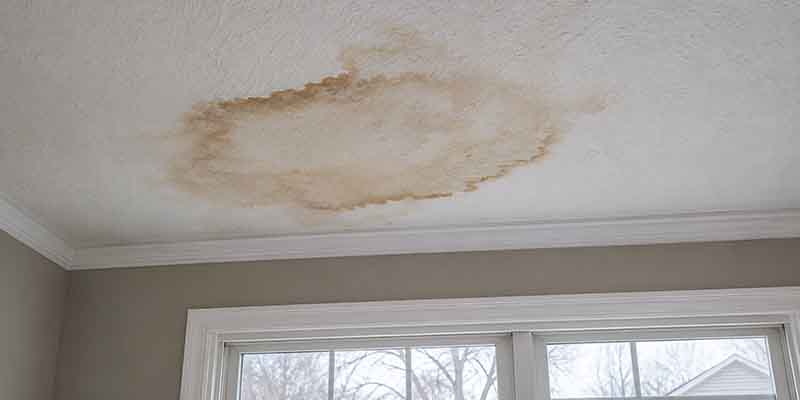
A brown ring on your bedroom ceiling, peeling paint in the hallway, or a damp patch above the living room can be the first sign of a hidden water problem. Even if you cannot see water dripping, moisture may be collecting above the drywall.
Is that ceiling stain from a roof leak, a leaking pipe, or condensation in the attic? Two of the most helpful clues are where the stain appears and when it changes. Here is what Central Ohio homeowners should look for before scheduling an inspection.
1. Check Where the Ceiling Water Stain Appears
Start by identifying what is directly above the affected area. Water can travel along pipes, rafters and framing before reaching the ceiling, so the stain’s location is a clue to the source.
Stains on the top floor or directly below the attic
A water stain in an upstairs bedroom, hallway or room beneath the roof may indicate moisture entering through damaged shingles, deteriorated flashing, a roof vent or a chimney. A stain near an exterior wall can also develop when water infiltrates around the roof edge or backs up behind an ice dam.
Stains directly below an upstairs bathroom or laundry room
If a stain appears beneath a shower, toilet, sink or washing machine, plumbing is another likely source. Leaking supply lines, loose drain connections, worn seals and damaged shower pans can allow water to collect inside the ceiling.
Multiple stains across the upper floor
Widespread damp spots, especially in colder weather, may point to an attic moisture problem. Condensation can form on cold roof decking, nails and framing before dripping onto insulation and ceiling drywall.
2. Pay Attention to When the Stain Gets Worse
Keep a record of when the discoloration expands or becomes damp. The timing often helps narrow down the problem.
- During or shortly after rain: Suspect a roof leak, particularly if the stain returns whenever storms pass through.
- After wind-driven rain: Damaged flashing, shingles or seals around roof penetrations may let water enter only under certain weather conditions.
- After someone showers or runs the washing machine: A plumbing fixture or drain connection may be leaking.
- During dry weather: Consider a plumbing supply leak, HVAC condensate problem or attic condensation. Previously trapped rainwater can also show up later.
- After a freeze or snowmelt: Melting attic frost or water backing up behind an ice dam can cause a stain, even if there has been no recent rain.
If the stain appears only during heavy downpours, read our guide on why roofs sometimes leak only when it rains hard.
Roof Leak vs. Plumbing Leak vs. Attic Condensation
These common patterns can help you decide which professional to contact.
- Roof leak: Often appears beneath the attic, near a chimney, skylight or exterior wall. Staining typically changes after rain, snowmelt or storms. Contact a roofing contractor.
- Plumbing leak: Often develops below bathrooms, kitchens or water lines. It may change with fixture use or remain damp regardless of the weather. Contact a plumber.
- Attic condensation: May appear across several upper-floor areas. It can worsen during cold weather or when frost melts. An inspection of the attic, insulation, air sealing and roof ventilation can help identify the cause.
- HVAC moisture: May occur near attic air handlers or ducts, particularly while the air conditioner is running. An HVAC technician can check condensate drainage and duct insulation.
3. Look for Other Signs of Roof Damage
From a safe location on the ground, look for missing or displaced shingles, damaged flashing around chimneys, visible debris or damage following a storm. Inside your home, watch for peeling paint, recurring stains, musty odors and wet insulation visible from a safe attic access point.
A roof can leak through a small opening even when the shingles look normal from the ground. Water may enter higher up the roof and travel along the underside of the decking or rafters before appearing several feet away.
If the problem started after strong winds or hail, arrange a storm damage roof inspection to identify the affected area.
4. Why Attic Condensation Is Common During Ohio Winters
Central Ohio’s cold nights and changing temperatures can create conditions for condensation. Warm, humid indoor air can move through gaps around ceiling fixtures, attic hatches and pipes. When that air reaches cold roof surfaces, moisture can collect as water droplets or frost.
Bathroom exhaust fans that discharge into the attic, inadequate air sealing and ventilation problems can contribute to moisture buildup. Correcting condensation may involve improving air sealing, insulation, exhaust ducting or ventilation based on the attic’s design. The U.S. Department of Energy’s guide to durable attics explains how these moisture problems develop.
5. What to Do When You Discover a Ceiling Stain
- Photograph the stain and note the date, recent weather and any plumbing use upstairs.
- Watch for changes in its size or appearance without disturbing damaged drywall.
- If the ceiling is sagging or bulging, keep people away from the area. If water is near electrical fixtures, avoid touching them and arrange professional assistance promptly.
- Stay off the roof, especially during rain, snow or icy conditions.
- Schedule an inspection to identify and correct the source before repairing the ceiling.
Act promptly. Continued moisture exposure can damage drywall, insulation and framing. The Environmental Protection Agency recommends drying wet materials within 24 to 48 hours when possible to help prevent mold growth.
Frequently Asked Questions About Ceiling Water Stains
Does a brown ceiling stain always mean the roof is leaking?
No. Roof leaks, plumbing leaks, attic condensation and HVAC drainage issues can leave similar discoloration. The location, timing and an inspection help determine where the water originated.
Can a roof leak cause a ceiling stain without visible dripping?
Yes. Insulation and drywall can absorb moisture from small or intermittent leaks before water becomes visible inside the room.
Why is my ceiling stained when it hasn’t rained?
A plumbing leak, melting attic frost or HVAC condensation could be responsible. Water from an earlier rainstorm may also remain trapped above the ceiling and emerge later.
Can I paint over a ceiling water stain?
First correct the moisture source and ensure the affected materials are dry and sound. Once any damaged material has been repaired, a stain-blocking primer and appropriate paint can help restore the ceiling’s appearance.
Does a ceiling stain mean I need a new roof?
A localized roofing problem may be repairable. The age and overall condition of the roof, extent of moisture damage and inspection findings determine whether repair or replacement makes sense.
Schedule a Free Roof Inspection in Central Ohio
If you notice a new or recurring water stain on your ceiling, Pro III Roofing, Windows & Siding can help evaluate whether the roof is responsible and explain your roofing repair options.
Our family-owned, fully insured company provides residential and commercial roofing services throughout Marysville, Delaware, Marion, Columbus, Dublin, Hilliard, Powell, Plain City, Worthington, Richwood and surrounding Central Ohio communities.
Call (614) 581-4937 or request your free roof inspection and estimate today.